
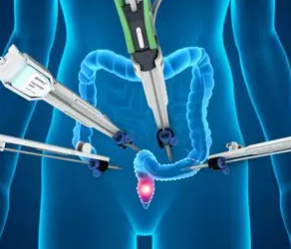
Robotic surgery delivers measurable advantages over open and laparoscopic approaches for most colon cancer cases today. Higher lymph node yield, lower intraoperative blood loss and shorter hospital stays show up consistently across randomised trials. The platform performs strongest in obese patients, narrow male pelvises and complex right-sided tumours where laparoscopic visibility runs short. Surgeon volume and tumour anatomy continue to drive long-term oncological outcomes more than platform choice itself.
According to Dr. Sandeep Nayak, Oncologist in India,“The robotic platform isn’t a magic upgrade. It’s a precision tool that becomes useful in tight spots where laparoscopic angles run out. For most colon cancer cases done by experienced hands, it shaves recovery time, reduces blood loss and gives cleaner lymph node yield.“
Considering robotic over laparoscopic surgery for your colon cancer treatment?
What Advantages Does Robotic Colon Surgery Actually Offer?
These are the clinical gains documented in published trials comparing robotic with laparoscopic and open colon cancer surgery.
- Tissue Precision: Robotic wristed instruments rotate 540 degrees inside the abdomen, letting surgeons dissect along anatomical planes with millimetre control, and the result shows up as cleaner margins on pathology reports across consecutive case series.
- Lymph Node Yield: D3 lymph node dissection through robotic access reaches the central vascular pedicle more reliably than laparoscopic approaches, and yield numbers consistently cross the 22-node threshold that drives accurate staging.
- Reduced Blood Loss: Stable 3D HD vision combined with tremor filtration cuts intraoperative bleeding sharply, with most robotic colectomies finishing under 100ml blood loss compared to laparoscopic averages closer to 200ml.
- Faster Recovery: Smaller working incisions, less tissue trauma and earlier bowel function return shave one to three days off hospital stay, and patients often resume regular activity inside three weeks rather than five.
The platform’s strength shows up most clearly in narrow pelvises, obese patients and complex tumour locations, and our robotic-assisted colon surgery page breaks down which cases benefit most.
Where Does Robotic Surgery Match or Lag Laparoscopic Approaches?
Robotic isn’t always better. The platform shows real advantages in specific scenarios but draws roughly even with laparoscopic surgery in straightforward cases.
- Standard Right Colectomy: Both approaches deliver near-identical oncological outcomes for uncomplicated right-sided tumours, and the choice often comes down to surgeon preference, theatre availability and cost rather than measurable patient benefit.
- Operative Time: Robotic setup adds 20 to 40 minutes per case compared to laparoscopic surgery, and that gap matters in busy theatres where throughput shapes scheduling decisions across a full surgical week.
- Cost Difference: Robotic colectomies cost 25 to 40 percent more than laparoscopic in private centres, driven by instrument fees, robot amortisation and longer theatre use, even though the recovery savings partly offset the upfront price.
- Surgical Expertise: Outcomes correlate more tightly with surgeon volume than platform choice, and an experienced laparoscopic surgeon doing 100 colectomies a year often beats a low-volume robotic D3 lymph node dissection practice on hard endpoints.
Platform choice should follow tumour anatomy, patient build and surgeon track record together, and the staging of colon cancer breakdown explains how preoperative workup shapes the technical call.
Why Choose Dr. Sandeep Nayak for Robotic Colon Cancer Surgery
Dr. Sandeep Nayak brings 24 years of surgical oncology experience, DNB qualifications in Surgical Oncology and General Surgery, plus a fellowship in Laparoscopic and Robotic Onco-Surgery to robotic colon cancer surgery at KIMS Hospital and MACS Clinic, Bangalore. He’s the originator of the RABIT, MIND and L-VEIL minimally invasive techniques, has performed thousands of robotic and laparoscopic colorectal procedures, and published over 25 peer-reviewed clinical studies. Patients comparing robotic against laparoscopic options for their specific tumour are walked through pathology data, recovery timelines and realistic cost differences before any platform commitment, with every case reviewed through tumour board. Call +91 9482202240 to book your consultation.
FAQ
Is robotic surgery safer than laparoscopic for colon cancer?
Robotic surgery shows lower blood loss and conversion rates than laparoscopic in complex cases, with similar safety in standard colectomies.
Does robotic colon surgery cost more than laparoscopic?
Robotic colectomies cost 25 to 40 percent more than laparoscopic in private centres, driven by instrument fees and longer theatre time.
How long is recovery after robotic colon cancer surgery?
Hospital stay averages three to five days, and most patients resume light activity within two to three weeks of robotic colectomy.
Are oncological outcomes similar between robotic and laparoscopic colectomy?
Long-term survival and recurrence rates are comparable, though robotic surgery delivers higher lymph node yield and lower blood loss.
Reference Link
- National Cancer Institute – Colon Cancer Treatment
- World Health Organization – Colorectal Cancer
Disclaimer: Reference links are provided solely for academic and clinical context and do not imply endorsement or accountability for third-party medical content.