
Hereditary/Family Risk and Genetic Overview (When to Consider Early Screening)
Colon cancer is one of the most common cancers worldwide, and while most cases occur by chance, a significant share is linked to inherited genes. When colon cancer appears repeatedly in a family, relatives may carry a higher-than-average risk that begins at a younger age. This is where a clear family history and genetic overview matter, helping individuals understand their inherited risk and decide when early screening is needed.
Dr. Sandeep Nayak, a renowned surgical oncologist and one of the pioneers of robotic cancer surgery in India, notes:
Inherited risk is often missed because families never connect their relatives’ diagnoses. He adds that recognizing this pattern early allows screening to begin at the right time, when colon cancer can be detected or prevented.

At MACS Clinic, Dr. Nayak brings specialized expertise in colon cancer treatment, hereditary risk assessment, and genetic evaluation, supported by years of experience in advanced minimally invasive surgery. Known for explaining complex risk in simple terms, he helps patients and their families understand where they stand and take timely, well-informed steps toward prevention.
Let’s begin with the basics.
Introduction to Hereditary Colon Cancer Risk
First, here’s what “hereditary risk” actually means.
Colon cancer can be grouped into three broad categories based on cause:
Sporadic. The most common type occurs by chance with no clear family link.
Familial. Cancer occurs more often in families than expected, but no single faulty gene has been identified.
Hereditary. A specific inherited gene change can persist across generations and sharply raise risk.

Hereditary colon cancer accounts for a smaller portion of cases, but it carries important consequences. People in this group often develop cancer earlier in life and may be at risk of other cancers too. Recognizing hereditary risk early allows for closer monitoring and timely action.
Now, let’s look at the genes that contribute to inherited risk.
Understanding Genetic Factors in Colon Cancer
Certain inherited conditions are strongly linked to colon cancer. The two most recognized are:
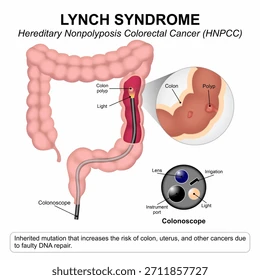
Lynch syndrome (Hereditary Non-Polyposis Colorectal Cancer)
The most common hereditary colon cancer syndrome. It raises the risk of colon cancer and several other cancers, often at a younger age.
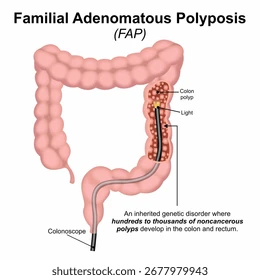
Familial Adenomatous Polyposis (FAP)
A condition causing hundreds or thousands of polyps in the colon, which carries a very high chance of becoming cancerous if untreated.
A condition causing hundreds or thousands of polyps in the colon, which carries a very high chance of becoming cancerous if untreated.
Other, less common syndromes also exist. These conditions are caused by changes (mutations) in specific genes that normally help repair DNA or control cell growth. When such genes are faulty, abnormal cells can grow unchecked. A single altered gene can be passed from parent to child, which is why these conditions cluster in families.
Want clarity on your genetic risk?
Get in touch with an expert to discuss testing options.
When to Consider Early Screening for Colon Cancer
For people at average risk, screening usually begins around age 45. But early screening should be considered if any of the following apply:
- A close relative (parent, sibling, or child) diagnosed with colon cancer, especially before age 50
- Multiple relatives across generations with colon or related cancers
- A known hereditary syndrome, such as Lynch syndrome or FAP, in the family
- A personal history of polyps, inflammatory bowel disease, or previous cancer
- Symptoms such as a change in bowel habits, blood in the stool, or unexplained weight loss
Dr. Sandeep Nayak advises, “If one or more of these fit your situation, screening may need to begin years earlier than the standard age. The exact timing depends on your specific family and medical history.”
Your family tree holds important clues. Here’s why it matters.
The Role of Family History in Colon Cancer Risk
Family history is one of the strongest indicators of inherited colon cancer risk. The more closely related the affected family member is, and the younger they are at diagnosis, the higher your own risk tends to be.
When reviewing family history, doctors look at:
Who was affected?
First-degree relatives carry more weight than distant ones
How many were affected?
Several cases point to a stronger inherited pattern.
Age at diagnosis.
A cancer diagnosis before 50 raises concern for a hereditary cause.
Type of cancers.
Some cancers, like uterine cancer, cluster with colon cancer in syndromes such as Lynch syndrome.
Putting together an accurate family history is a simple but powerful step. It helps a specialist decide whether genetic testing and early screening are appropriate for you.
Genetic Testing and Counseling for Colon Cancer
If the risk seems high, genetic testing can provide concrete answers.
Genetic counseling and testing help confirm whether an inherited gene change is present in a family. The process usually involves:
Genetic counseling
A trained professional reviews your family history, explains the testing process, and discusses what results may mean for you and your relatives.
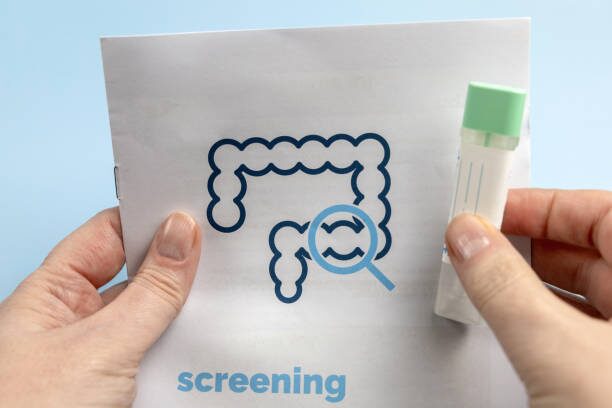
Genetic testing
A simple blood or saliva sample is analyzed for known gene mutations linked to colon cancer.
Interpreting results
A positive result means a higher inherited risk and the need for closer screening. A negative result can offer reassurance, while an uncertain result is explained in context.
Testing is most useful when guided by a specialist. Knowing the result allows you and your family to make informed decisions about screening and prevention. Importantly, identifying a gene change early gives you the chance to act before cancer develops.
For high-risk individuals, screening looks different. Here’s how.
Screening Guidelines for High-Risk Individuals
People with a hereditary or strong family risk need earlier and more frequent screening than the general population. While exact recommendations are tailored to each person, general principles include:
Earlier start.
Screening may begin in the 20s or 30s, or even earlier, for certain syndromes.
More frequent colonoscopy.
Instead of every ten years, high-risk individuals may need a colonoscopy every one to two years.
Syndrome-specific care.
Conditions like FAP may require specialized surgical planning, while Lynch syndrome calls for monitoring of other organs, too.
Family screening.
When a gene change is found, relatives are often advised to undergo testing and screening as well.
Colonoscopy remains the most effective screening tool because it can detect and remove polyps before they become cancerous. A specialist will set a schedule suited to your individual risk.
Benefits of Early Detection Through Screening
Here’s why acting early changes everything.
Early detection is the single most powerful advantage in managing colon cancer risk:
Prevention, not just detection
Removing polyps during a colonoscopy can stop cancer before it starts.
Higher success rates
Colon cancer found early is far more treatable than cancer found late.
Peace of mind
Regular screening replaces uncertainty with clarity and control.
Protecting your family
Identifying risk helps relatives take preventive steps too.
For people with hereditary or family risk, early screening is not just helpful; it can be life-saving. The effort required for regular check-ups is small compared to the protection they offer.
Don't wait for symptoms.
Book your screening consultation now.
Choosing the right specialist makes a real difference. Here’s what sets our care apart.
Why Choose Our Expertise in Hereditary Colon Cancer Risk Management
Hereditary colon cancer risk needs careful, experienced evaluation, and that is where our team stands apart. Care here is led by Dr. Sandeep Nayak, a highly regarded surgical oncologist and a pioneer of robotic and minimally invasive cancer surgery in India.
Specialist expertise
Headed by Dr. Sandeep Nayak, a leading oncologist in India with deep experience in colon cancer care.
Thorough risk assessment
Detailed review of family history to identify inherited patterns and true risk levels.

Guided genetic testing
Clear advice on when testing is needed and what the results mean for you and your family.
Personalized screening plans
Screening schedules are built around each individual’s risk, not a one-size-fits-all approach.
Patient-focused approach
Complex risk is explained in simple terms, so every patient understands their options.
Complete care under one roof
From early screening to advanced treatment, all stages of care in one place.
For a trusted, in-depth background on inherited colorectal cancer, you can also refer to the hereditary colorectal cancer information from the American Cancer Society.
FAQ
Does having a family history mean I will get colon cancer?
No. It raises your risk but does not guarantee cancer. Early screening helps manage that risk.
Does having a family history mean I will get colon cancer?
Often earlier than the standard age of 45, sometimes in the 20s or 30s, depending on your family history.
Should the whole family get tested?
If a gene change is found in one family member, relatives are usually advised to consider testing as well.
How often should high-risk individuals get screened?
Often, every 1 to 2 years, though the exact schedule depends on the specific risk and condition.
Can hereditary colon cancer be prevented?
While risk cannot be removed, regular screening and polyp removal can prevent many cancers from developing.
Disclaimer: The information shared in this content is for educational purposes and not for promotional use.