
Staging of Rectal Cancer: Understanding the Process
Staging of rectal cancer describes how far the disease has grown and whether it has spread beyond the rectum to lymph nodes or distant organs. It is the single most important factor in planning treatment, as it tells the medical team how advanced the cancer is and which therapies will work best.
“Staging is the roadmap for everything that follows,” says Dr. Sandeep Nayak, a globally recognized surgical oncologist in India. “Two patients with the same diagnosis can need very different treatment, and accurate staging is what tells us exactly which path to take.”
With over two decades of experience, Dr. Nayak treats accurate staging as the cornerstone of successful rectal cancer care. Through advanced imaging and team-based assessment, his approach to colorectal cancer treatment at MACS Clinic in Bangalore ensures the stage is confirmed precisely before any decision, avoiding both undertreatment and overtreatment.
Did you know staging shapes every treatment decision? Let’s explore why it plays such a vital role in rectal cancer.
Why Staging Matters in Rectal Cancer
Staging indicates how deeply the tumor has grown and whether it has spread to other parts of the body. This information guides whether a patient needs surgery alone or a combination of radiation, chemotherapy, and surgery. It also helps predict outcomes and the chances of recurrence.
Without accurate staging, treatment can be either too aggressive or not enough. That is why a thorough staging workup is the foundation of every effective plan for rectal cancer treatment at MACS Clinic in Bangalore.
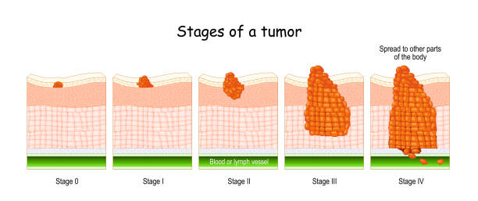
Wondering what those letters and numbers in a report mean? Let’s dive into the system doctors use to stage rectal cancer.
How Rectal Cancer Is Staged: The TNM System
Most rectal cancers are staged using the TNM system, which looks at three key factors:
T (Tumor)
How deeply the tumor has grown into the rectal wall.
N (Nodes)
Whether cancer has spread to nearby lymph nodes.
M (Metastasis)
Whether cancer has spread to distant organs such as the liver or lungs.
These three values are combined to assign an overall stage from 0 to IV, giving a clear picture of how advanced the cancer is.
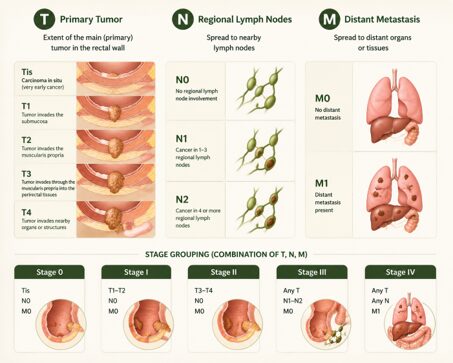
Stage 0 (Carcinoma in Situ)
At Stage 0, the cancer is confined to the innermost lining of the rectum and has not grown into deeper layers. It is also called carcinoma in situ and is the most treatable stage. Removal of the abnormal tissue is often enough at this point.
Stage I Rectal Cancer
In Stage I, the cancer has grown into the deeper layers of the rectal wall but has not reached the lymph nodes or distant organs. The tumor remains localized within the rectum. Surgery is usually the main treatment, and outcomes are very good.
Stage II Rectal Cancer
At Stage II, the cancer has grown through the rectal wall into nearby tissue but has not spread to the lymph nodes. Depending on how far it has reached, treatment may combine surgery with radiation and chemotherapy. The aim is to remove the tumor completely and lower the risk of recurrence.
Stage III Rectal Cancer
In Stage III, the cancer has spread to nearby lymph nodes but not to distant organs. Treatment typically involves a combination of radiation, chemotherapy, and surgery. This multimodal approach helps target both the tumor and the affected nodes.
Stage IV (Advanced or Metastatic) Rectal Cancer
At Stage IV, the cancer has spread to distant organs such as the liver, lungs, or distant lymph nodes. Treatment may include surgery, chemotherapy, targeted therapy, and immunotherapy to control the disease and manage symptoms. Even at this stage, modern therapies can improve quality of life and, in selected cases, extend survival.
The clearer the stage, the better the plan.
How do doctors figure out the exact stage? Let’s discover the tests that make staging accurate.
Tests Used to Determine the Stage
MRI of the pelvis:
Shows how deep the tumour has grown and whether nearby nodes are involved.
CT scan
Checks the chest, abdomen, and pelvis for any distant spread.
Endorectal ultrasound
Assesses how far the tumor has invaded the rectal wall in early cases.
Colonoscopy and biopsy
Confirms the cancer and provides tissue for analysis.
PET scan
Helps detect hidden spread in selected advanced cases.
Blood tests
The CEA tumor marker supports staging and tracks treatment response.
Does the stage really decide the treatment? Let’s explore how staging shapes every decision.
How Staging Guides Your Treatment
The stage of rectal cancer directly determines the type and order of treatment. Early stages may be cured with surgery alone, while more advanced stages of rectal cancer often need radiation and chemotherapy before or after the operation. Staging also helps decide between options like sphincter-saving surgery and robotic-assisted procedures, ensuring the approach matches the exact extent of the disease.
Accurate staging also shapes the bigger picture of care, from predicting recovery to planning follow-up and lowering the risk of recurrence. It allows the team to balance effective cancer control with quality of life. To see how diagnosis connects to staging, read our detailed guide on understanding rectal cancer.
The right expert can shape the entire outcome of rectal cancer treatment. Here is what makes Dr. Sandeep Nayak a trusted choice for accurate staging and care.
Why Choose Dr. Sandeep Nayak for Rectal Cancer Care
Accuracy Before Action
He confirms the cancer’s exact extent before any treatment decision, so the plan is built on certainty rather than guesswork.
Sharp Eye for Imaging
Skilled in reading pelvic MRI and endorectal ultrasound to map tumor depth and nodal spread with precision.
Robotic Surgery Command
As one of India’s most experienced robotic colorectal surgeons, he operates with precision within the narrow pelvis, enabling faster recovery.

Stoma Only When Unavoidable
His sphincter-preserving technique helps many patients preserve natural bowel function and quality of life.
Therapy That Fits the Stage
Each treatment is tailored to the precise stage, avoiding both undertreatment and needless aggression.
Worldwide Credentials
An internationally trained surgical oncologist in India, recognized for advanced expertise and a strong international reputation.
Latest Surgical Technology
He operates using advanced robotic and laparoscopic platforms at top-rated, state-of-the-art cancer hospitals in Bangalore.
Results That Speak
Consistent outcomes are built on accurate staging, meticulous planning, and surgical precision.
Expert care can make all the difference in your recovery.
FAQ
1. What does staging of rectal cancer mean?
Staging describes how deep the tumor has grown and whether it has spread to lymph nodes or distant organs. It guides the entire treatment plan.
2. What is the TNM staging system?
TNM stands for Tumor, Nodes, and Metastasis. These three factors are combined to assign an overall stage from 0 to IV.
3. Can early-stage rectal cancer be cured?
Yes. Stage 0 and Stage I rectal cancer are often cured with surgery alone.
4. Is Stage IV rectal cancer treatable?
Yes. While it is advanced, treatments like chemotherapy, targeted therapy, and surgery can control the disease and improve quality of life.
5. Does a higher stage always mean a worse outcome?
Not always. Besides the stage, outcomes also depend on tumor location, treatment response, and overall health.
Disclaimer: The information shared in this content is for educational purposes and not for promotional use.