
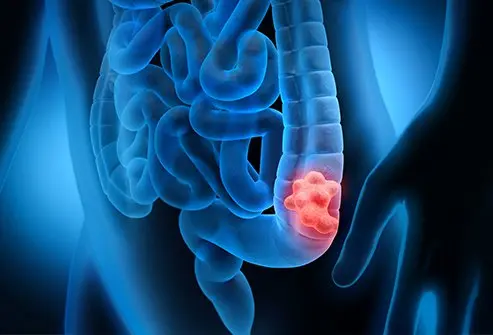
Early symptoms of colorectal cancer include persistent changes in bowel habits, blood in stool, abdominal cramping that doesn’t ease, unexplained weight loss, and ongoing fatigue. These signs often appear gradually and get mistaken for everyday digestive issues like piles or IBS. And spotting them early matters, because tumours are most curable before they spread beyond the bowel wall, with survival rates dropping sharply once they do.
According to Dr. Sandeep Nayak, colorectal cancer, “Most early stage tumours bleed quietly long before they cause pain, which is why any unexplained change in stool colour, frequency, or rectal bleeding deserves a colonoscopy rather than a wait-and-watch approach.”
Noticed a change in your bowel habits that just won’t settle?
What Are the Most Common Early Warning Signs?
The earliest signals usually involve the bowel itself, not pain or fever.
- Bleeding Rectal bleeding or dark blood mixed into stool is the most common first sign, and it often gets dismissed as piles when it isn’t.
- Bowel changes Loose stools one week and hard pellets the next, or pencil-thin output lasting beyond four weeks, usually points to something blocking or irritating the inner lining.
- Cramps Persistent abdominal cramping that keeps returning to the same spot deserves attention, especially when paired with a feeling of incomplete bowel emptying.
- Fatigue Slow internal bleeding causes iron-deficiency anaemia weeks before visible blood shows up in stool, and a routine blood test often catches this clue ahead of any other symptom.
Any of these lasting beyond four weeks needs a colorectal cancer screening, not a chemist’s remedy. Most patients wait far too long to take this step.
Which Symptoms Need Immediate Medical Attention?
Some signs shouldn’t wait for the next routine check-up.
- Bleeding Heavy rectal bleeding or persistent dark stools always need same-week evaluation, never a home remedy first.
- Weight loss Losing five kilos or more without trying, especially alongside any bowel change, sharply raises the suspicion.
- Obstruction Sudden bloating with vomiting and no gas passage points to a possible blockage and needs urgent imaging, not a laxative.
- Lump Anything palpable through the abdominal wall is late-stage until proven otherwise, and it overlaps with several signs of colon cancer that get ignored for months.
So earlier diagnosis means simpler surgery, fewer chemotherapy cycles, and far higher long-term survival.
Why Choose Dr. Sandeep Nayak?
Dr. Sandeep Nayak is a leading colorectal surgeon with over 20 years of experience in minimally invasive and robotic procedures for colon and rectal cancers. He serves as Executive Director of Surgical Oncology and Robotic Surgery at leading hospitals, performing some of the most complex sphincter-saving and HIPEC cases in the country. Read more about Dr. Sandeep Nayak.
Patients under his care see higher lymph node yields, lower permanent stoma rates, and faster recovery than the national average. Many travel from across India and overseas for the kind of precision robotic approach he’s known for. Early diagnosis, expert hands. That’s the difference.
Call +91 9482202240 to book your consultation.
FAQ
Can colorectal cancer show no symptoms in early stages?
Yes, many early tumours stay silent, which is why screening from age 45 matters.
Is blood in stool always colorectal cancer?
No, but it always needs evaluation to rule out tumours, polyps, or bowel disease.
How long do early symptoms usually last?
Symptoms persisting beyond four weeks should not be ignored, regardless of severity.
What is the first test if symptoms appear?
A colonoscopy is the standard first investigation when colorectal cancer is suspected.
Reference Link
- Colorectal Cancer Patient Information — National Cancer Institute
- Colorectal Cancer Fact Sheet — World Health Organization
Disclaimer: Reference links are provided solely for academic and clinical context and do not imply endorsement or accountability for third-party medical content.