
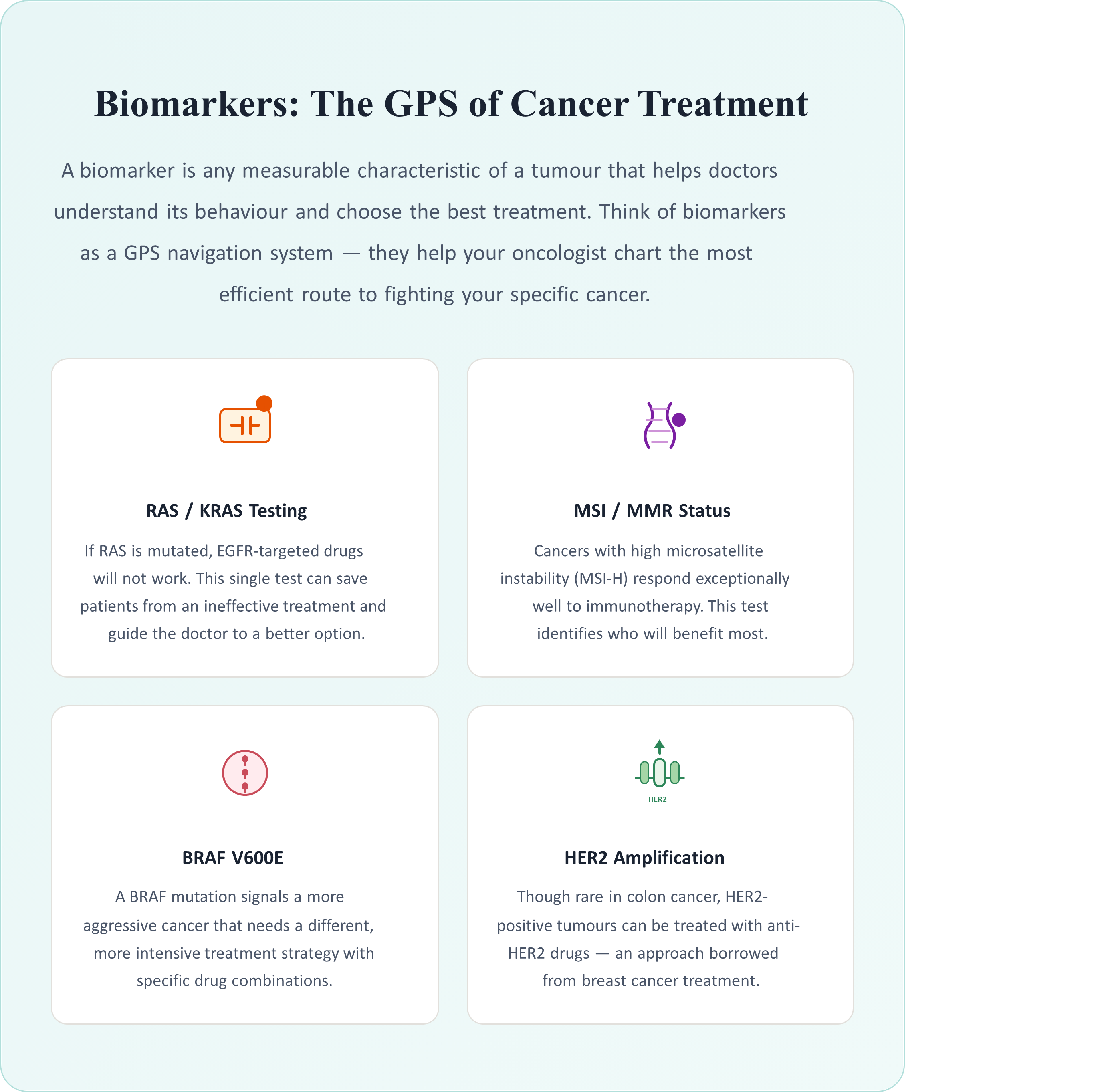
If you or someone you know has been diagnosed with colon cancer, you have probably heard terms like chemotherapy, targeted therapy, and immunotherapy. A few years ago, most patients received the same type of chemotherapy regardless of their cancer’s individual characteristics. Today, that is no longer the case. We now have ways to read the unique “fingerprint” of each cancer, and use that information to choose the treatment most likely to work. These fingerprints are called biomarkers, and they are transforming how we treat colon cancer.
The Three Pillars of Colon Cancer Drug Treatment
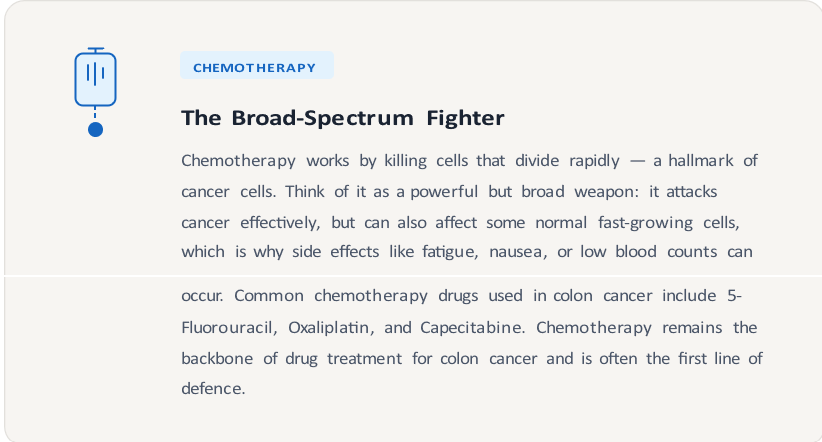
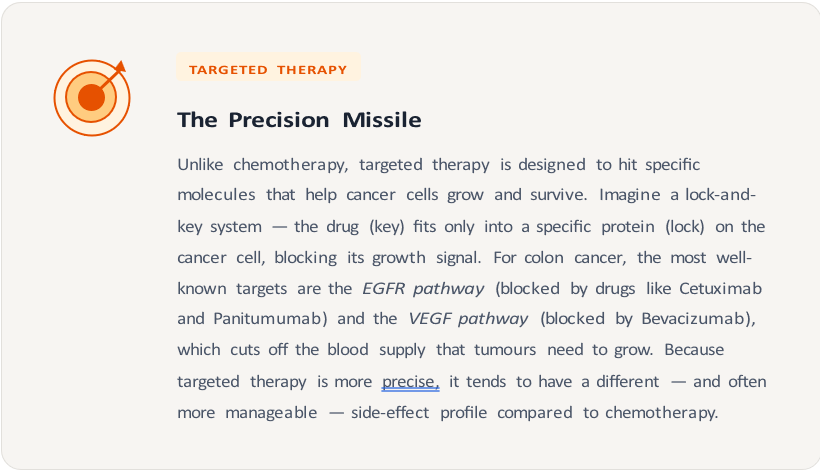
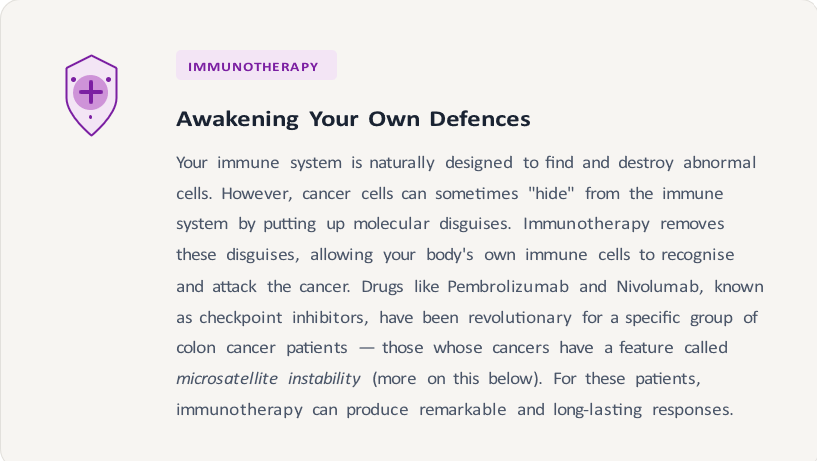
Surgery remains the most important treatment for colon cancer that has not spread widely. But many patients also need medications — either after surgery to reduce the chance of the cancer returning, or as the main treatment when the cancer has spread to other organs. These medications fall into three broad categories, each working in a very different way.
How Biomarker Testing Guides Your Treatment
When a patient is diagnosed with colon cancer, one of the first things the medical oncologist does is send the tumour tissue for biomarker testing. The results of these tests create a molecular profile of the cancer — essentially, a detailed identity card.
Based on this identity card, the oncologist can determine which category of treatment the patient is most likely to benefit from.
Here is a simplified picture of how this works in practice:
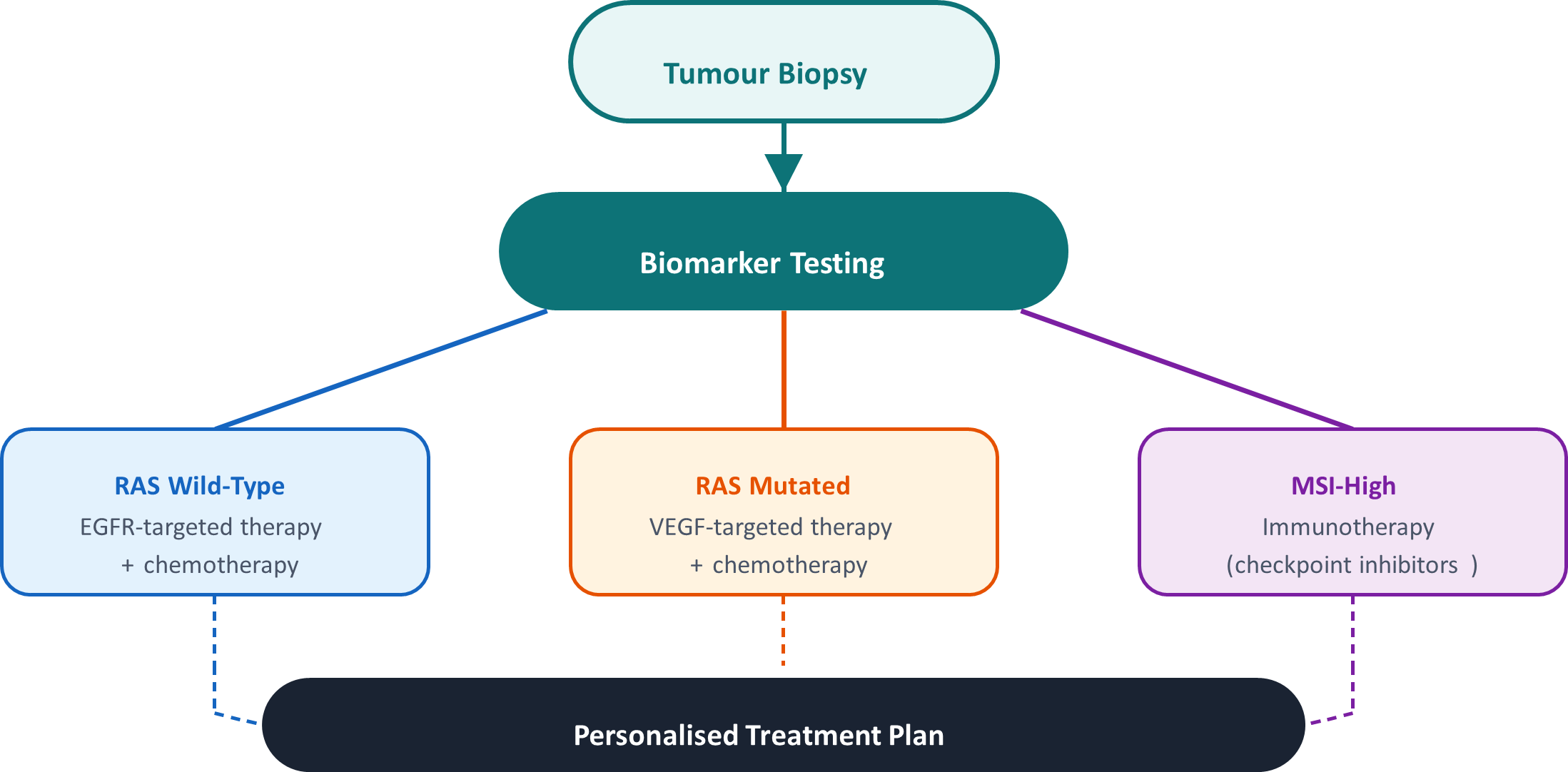
As you can see, the same diagnosis — colon cancer — can lead to very different treatment paths depending on the biomarker results. A patient whose tumour is RAS wild-type (meaning the RAS gene is normal) may benefit from drugs that block the EGFR growth signal. A patient whose tumour is RAS mutated would not respond to those same drugs, and would instead be offered a different combination. And a patient whose tumour shows high microsatellite instability might receive immunotherapy, which can sometimes produce dramatic shrinkage of the cancer.
Why does this matter to you? Because biomarker testing ensures you are not given a treatment that is unlikely to help. It means fewer wasted weeks, fewer unnecessary side effects, and a better chance of the treatment working. Always ask your oncologist: “Has my tumour been tested for biomarkers?”
The Real-World Impact: What Has Changed?
A decade ago, most patients with advanced colon cancer received similar chemotherapy combinations. The results were decent, but there was significant room for improvement. Today, thanks to biomarker-driven treatment, we can point to several transformative shifts:
For patients with MSI-High cancers, immunotherapy has changed what was once a difficult-to-treat situation into one where some patients achieve complete
disappearance of their cancer — a scenario that was nearly unimaginable a few years ago.
For patients with BRAF V600E mutations, a triple-drug combination targeting the specific mutation has significantly improved survival compared to standard chemotherapy alone.
For patients whose cancers are RAS wild-type and left-sided (arising from the left half of the colon), EGFR-targeted therapy added to chemotherapy has shown meaningful survival benefits.
Even rare biomarkers like HER2 amplification and NTRK fusions now have matched drugs available, giving hope to patients who would have previously had very limited options.
What Should You Ask Your Doctor?
If you or a loved one has been diagnosed with colon cancer — particularly advanced colon cancer — here are some important questions to bring to your consultation:
Has my tumour been tested for RAS and BRAF mutations?
What is my MSI or MMR status? Based on my biomarkers, what treatments are most likely to work for me?
Am I eligible for immunotherapy?
Are there any clinical trials suited to my cancer's profile?
These questions can open up a meaningful conversation with your oncologist and help you become an active partner in your treatment decisions.
Disclaimer: This blog is written for general awareness and educational purposes only. It is not a substitute for professional medical advice. Please consult your treating oncologist for decisions
specific to your condition.