
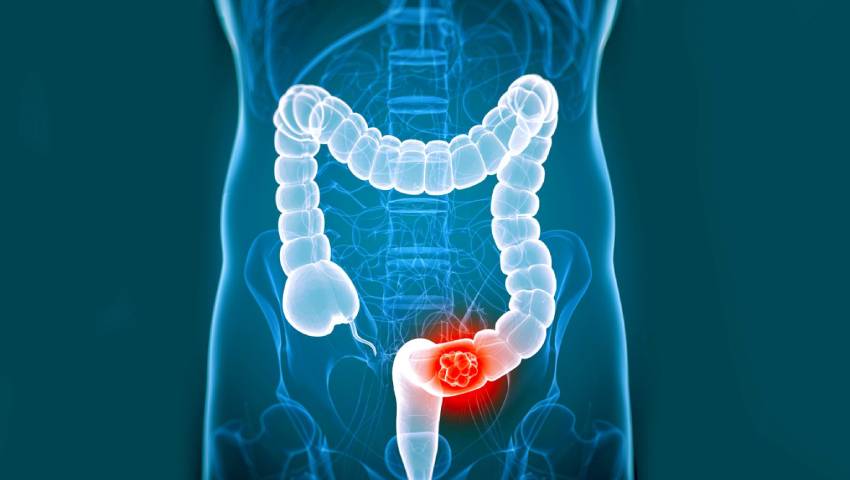
Colorectal cancer is diagnosed early through colonoscopy, stool tests, CT imaging, and blood marker assessment. Colonoscopy is the most reliable method, allowing direct visualisation and biopsy of the bowel lining in a single session. Early detection before the cancer spreads beyond the bowel wall gives patients the widest treatment options.
According to Dr. Sandeep Nayak, leading oncologist in India, “Routine screening identifies colorectal cancer at a stage where the full range of minimally invasive and sphincter preserving treatment options remains available, whereas symptom driven diagnosis frequently presents at a point where those choices are already limited.”
Noticed a bowel change that hasn’t resolved in a few weeks?
What Tests Diagnose Colorectal Cancer?
Not one test alone. A sequence of investigations, each narrowing the picture further.
- Colonoscopy: A flexible camera travels the full length of the colon and rectum under sedation, takes biopsies from anything abnormal, and removes polyps on the spot before they have any chance to progress toward malignancy.
- Stool Analysis: FIT and FOBT pick up microscopic blood in stool that isn’t visible to the naked eye, making them a practical entry point for average risk patients, though any positive result moves straight to a confirmatory colonoscopy.
- CT Colonography: A cross sectional scan maps the entire colon without sedation and detects lesions a physical examination would never identify, though tissue sampling still requires a separate endoscopic procedure to confirm any finding.
- CEA Marker: Carcinoembryonic antigen levels in blood signal abnormal cellular activity and work well for monitoring high risk patients or flagging recurrence, though not specific enough to use as a standalone primary screening tool.
Every positive finding needs to be assessed through the colon cancer pathway before any treatment decisions are made.
Which Symptoms Prompt Early Investigation?
Pain is rarely the first signal. These changes appear well before things get serious.
- Rectal Bleeding: Blood in stool or on tissue after a bowel movement is consistently written off as piles without examination, but it remains one of the most reliable early indicators of bowel malignancy and always needs a proper clinical review.
- Bowel Changes: Stool that becomes persistently thinner, more frequent, or simply different from years of normal patterns, lasting beyond three to four weeks, warrants investigation regardless of how mild it currently feels.
- Unexplained Fatigue: A low haemoglobin count on a routine blood panel alongside ongoing tiredness frequently points to slow internal bleeding from a bowel lesion, appearing well before any visible symptom develops.
- Abdominal Discomfort: Recurring cramps or a persistent sense of incomplete emptying returning to the same location deserve attention, particularly in adults past the age of 40 where the threshold for investigation should already be lower.
And if fear of the procedure has been delaying the appointment, our earlier blog on colonoscopy guide covers exactly what happens on the day and why most patients find it far easier than expected.
Why Choose Dr. Sandeep Nayak for Colorectal Cancer Diagnosis
Dr. Sandeep Nayak brings over 20 years of experience in colorectal cancer diagnosis, staging, and surgical treatment across major Bangalore hospitals. He leads Surgical Oncology and Robotic Surgery at multiple centres and trains surgeons across India in minimally invasive colorectal techniques.
Patients seen at an early stage consistently avoid more complex surgery, need fewer treatment cycles, and leave hospital well ahead of national benchmarks. Early diagnosis doesn’t just improve survival. It changes what treatment looks like entirely.
Call +91 9482202240 to book your consultation.
FAQ
What is the most reliable test for early colorectal cancer diagnosis?
Colonoscopy is the gold standard as it allows direct visualisation and biopsy in one procedure.
Can colorectal cancer be detected through a blood test alone?
No, blood tests like CEA support diagnosis but cannot confirm colorectal cancer independently.
At what age should early colorectal cancer investigation begin?
At 45 for average risk adults, earlier if symptoms appear or family history is present.
Is early stage colorectal cancer always symptomatic?
No, many early stage colorectal cancers produce no symptoms, which is why routine screening matters.
Disclaimer:
This blog is intended for informational and educational purposes only. It does not constitute medical advice.