
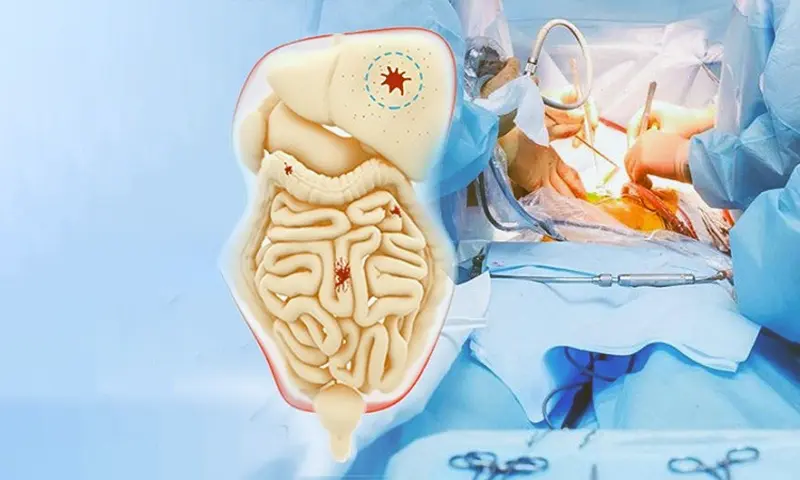
HIPEC (Hyperthermic Intraperitoneal Chemotherapy) is a specialized, two-step cancer treatment. First, surgeons perform cytoreductive surgery to remove all visible tumors within the abdomen. Second, they circulate heated chemotherapy drugs directly into the abdominal cavity to destroy any remaining microscopic cancer cells.
According to Dr. Sandeep Nayak, Oncologist in India,”HIPEC isn’t a last resort. It’s the standard of care for selected peritoneal cancers when delivered with proper cytoreduction and patient selection. The combination of surgery and heated chemotherapy in one session reaches disease that systemic chemotherapy struggles to clear.”
Diagnosed with peritoneal cancer spread and weighing HIPEC as a treatment option?
How Does HIPEC Surgery Actually Work?
The procedure unfolds in two distinct stages within a single operative session, and the sequence matters as much as the technique itself.
- Cytoreductive Surgery: The surgical team removes all visible tumour deposits from the peritoneal cavity, peeling cancer off the bowel, omentum, diaphragm and pelvic surfaces in what often takes six to ten hours of meticulous dissection.
- Heated Chemotherapy Delivery: Once cytoreduction is complete, chemotherapy heated to 41 to 43 degrees Celsius is circulated through the abdomen for 60 to 90 minutes via inflow and outflow catheters, with constant temperature monitoring throughout.
- Drug Selection: Mitomycin C, oxaliplatin or cisplatin are chosen based on cancer type and tumour board recommendation, with the dose calculated from body surface area rather than fixed protocols.
- Closure and Recovery: The chemotherapy is drained completely, the abdomen is closed, and the patient moves to ICU for one to two days of monitored recovery before stepping down to ward care.
The single-session combination matters because heat penetrates tissue better than systemic delivery, and our robotic-assisted colorectal surgery page covers what minimally invasive cytoreduction adds in selected low-PCI cases.
Which Patients Actually Need HIPEC Surgery?
Selection determines outcomes. The criteria stay strict because HIPEC’s benefit shows up clearly in some cancers and barely registers in others.
- Colorectal Peritoneal Spread: Patients with peritoneal metastases from colon or rectal cancer and a peritoneal cancer index under 20 see meaningful survival gains over systemic chemotherapy alone, particularly when the primary tumour is controlled.
- Pseudomyxoma Peritonei: This rare appendiceal cancer producing mucinous deposits across the abdomen responds best to HIPEC, with five-year survival reaching 70 to 80 percent in patients receiving complete cytoreduction.
- Ovarian Cancer: Recurrent or advanced epithelial ovarian cancer benefits from HIPEC after interval debulking, with selected protocols extending progression-free survival significantly compared to surgery and systemic chemotherapy alone.
- Mesothelioma and Gastric: Peritoneal mesothelioma and selected gastric cancers with limited peritoneal spread qualify when complete cytoreduction is achievable, supported by staging of colon cancer workup principles applied to peritoneal disease evaluation.
Selection rests on imaging, diagnostic laparoscopy and tumour board review, and the laparoscopic colorectal surgery page covers how minimally invasive staging assessment informs HIPEC suitability calls.
Why Choose Dr. Sandeep Nayak for HIPEC Surgery?
Dr. Sandeep Nayak brings 24 years of surgical oncology experience, DNB qualifications in Surgical Oncology and General Surgery, plus a fellowship in Laparoscopic and Robotic Onco-Surgery to HIPEC and cytoreductive surgery at KIMS Hospital and MACS Clinic, Bangalore. He’s the originator of the RABIT, MIND and L-VEIL minimally invasive techniques, has performed over 50 HIPEC procedures across colorectal, ovarian, appendiceal and mesothelioma origins, and published over 25 peer-reviewed clinical studies. Patients diagnosed with peritoneal disease get a clear-eyed assessment of HIPEC suitability, expected outcomes and realistic recovery timelines through tumour board review before committing to treatment. Call +91 9482202240 to book your consultation.
FAQ
How long does HIPEC surgery take?
Total operative time runs eight to twelve hours, with cytoreduction taking six to ten hours and heated chemotherapy circulated for 60 to 90 minutes.
Is HIPEC painful after surgery?
Postoperative pain is managed through epidural and intravenous analgesia, with most patients reporting controlled discomfort during the seven to fourteen day hospital stay.
What is the success rate of HIPEC surgery?
Five-year survival ranges 40 to 80 percent depending on cancer type, peritoneal cancer index and completeness of cytoreduction achieved during surgery.
Can HIPEC surgery be repeated?
Repeat HIPEC is possible in selected patients with isolated peritoneal recurrence, evaluated through tumour board review of imaging, performance status and prior response.
Reference Link
- National Cancer Institute – HIPEC and Peritoneal Cancer
- World Health Organization – Colorectal Cancer
Disclaimer: Reference links are provided solely for academic and clinical context and do not imply endorsement or accountability for third-party medical content.