
Immunotherapy and Targeted Therapy for Rectal Cancer Treatment
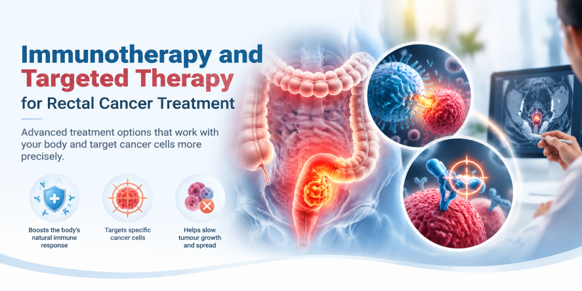
The treatment options for rectal cancer have become more personalized with the help of therapies depending on the characteristics of the tumour. Immunotherapy and targeted therapy for rectal cancer treatment make use of advanced approaches which target specific tumour-related mechanisms. Immunotherapy assists in making the immune system recognize cancer cells while targeted therapy works on blocking changes that aid in growing the cancer. The suitability of these therapies depends on tumour biology, biomarker results, stages of the cancer and treatment plan.
“Modern cancer care is heading towards personalized treatment plans. Molecular profiling of the tumour makes it easy to determine whether the patient can benefit from advanced treatment or not,” says Dr. Sandeep Nayak, a renowned surgical oncologist in Bangalore.
Dr. Sandeep Nayak is an expert in management of advanced colorectal cancers and complex treatment planning for patients with challenging conditions at MACS Clinic. His areas of expertise include accurate diagnosis, focusing on multidisciplinary decision making and personalised approaches for patients receiving rectal cancer treatment in Bangalore.
What Are Immunotherapy and Targeted Therapy for Rectal Cancer?
Need Assistance?
Understanding your tumour profile is important for personalised cancer care. Connect with an experienced specialist to explore advanced treatment options.
How Does Immunotherapy Work in Rectal Cancer Treatment?
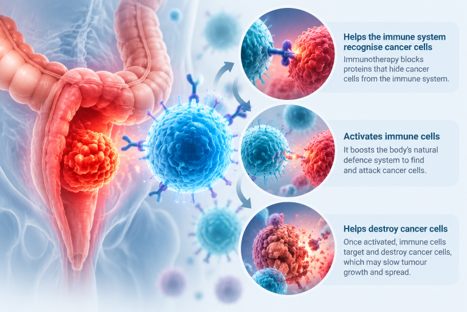
Our immune system naturally identifies and removes abnormal cells. Some cancer cells, though, develop mechanisms that allow them to hide from immune attack.
Immunotherapy medicines called immune checkpoint inhibitors help remove these barriers. They allow immune cells to recognise and target cancer cells more effectively.
In rectal cancer, immunotherapy may be particularly beneficial for patients whose tumours have specific characteristics, such as:
How Does Targeted Therapy Work Against Rectal Cancer?
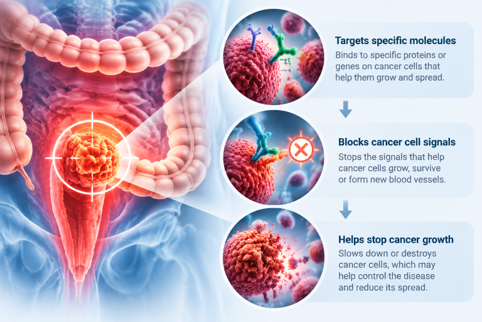
Targeted therapy focuses on specific changes that help cancer cells grow, divide or spread. Blocking those pathways can slow tumour progression.
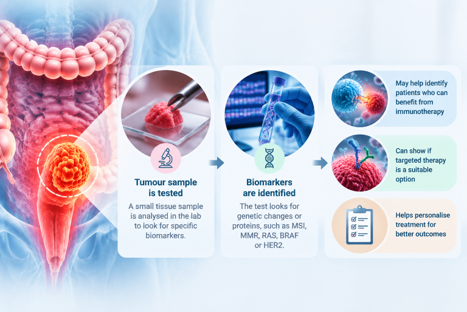
Before suggesting it, doctors usually perform biomarker tests. These show whether the tumour has changes that a particular medicine can act on.
Targeted therapies may focus on:
When Are Immunotherapy and Targeted Therapy Recommended?
Most patients don’t need these therapies. Doctors consider them when clinical picture or the tumour’s molecular features point to a real chance of benefit.
These treatments may be recommended for:
Role of Biomarker Testing in Selecting Advanced Rectal Cancer Treatments
Important tests may include:
Mismatch Repair (MMR) and Microsatellite Instability (MSI) Testing
RAS Mutation Testing
BRAF Testing
HER2 Testing
Which Rectal Cancer Patients May Benefit From Immunotherapy?
Immunotherapy is not suitable for all rectal cancer patients. Its effectiveness depends largely on the biological features of the tumour rather than cancer location alone.
Patients who may benefit from immunotherapy often include those with:
In selected patients, immunotherapy may produce a strong response because these tumours generate changes that make them more visible to the immune system.
Before recommending immunotherapy, doctors evaluate biopsy results, molecular testing reports, cancer stage, and previous treatments to determine the most appropriate approach.
Which Targeted Therapies Are Used for Rectal Cancer?
Some targeted treatments used in colorectal cancer care include:
EGFR Inhibitors
VEGF Inhibitors
BRAF-Targeted Treatments
HER2-Targeted Therapy
How Are Immunotherapy and Targeted Therapy Different From Chemotherapy?
| Treatment | How It Works | Treatment Selection |
| Chemotherapy | Targets rapidly dividing cells throughout the body | Based on cancer type, stage, and treatment goals |
| Immunotherapy | Activates the immune system to recognise and attack cancer cells | Based on immune-related tumour markers |
| Targeted Therapy | Blocks specific molecules involved in cancer growth | Based on genetic and molecular changes |
These treatments are often used as part of a broader strategy rather than replacing standard treatments in every situation.
Can Immunotherapy Be Used Before or After Rectal Cancer Surgery?
The role of immunotherapy and targeted therapy depends on the stage and biology of rectal cancer.
In selected cases, immunotherapy may be considered before surgery, especially when tumours have specific molecular features that suggest a strong response.
After surgery, these treatments may be considered based on:
Role of Immunotherapy and Targeted Therapy in Advanced Rectal Cancer
In advanced rectal cancer, immunotherapy and targeted therapy may help:
Benefits of Immunotherapy and Targeted Therapy in Rectal Cancer Care
Potential benefits include:
However, response varies from patient to patient. Careful evaluation is necessary before choosing these therapies.
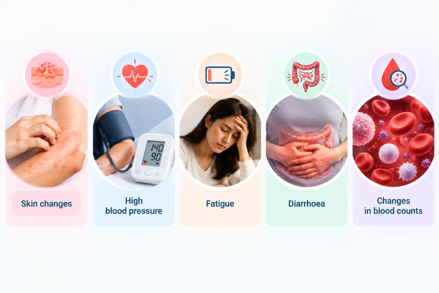
Possible Side Effects and Management During Treatment
Possible Immunotherapy Side Effects
Because immunotherapy activates the immune system, it may sometimes cause immune-related reactions such as:

Possible Targeted Therapy Side Effects
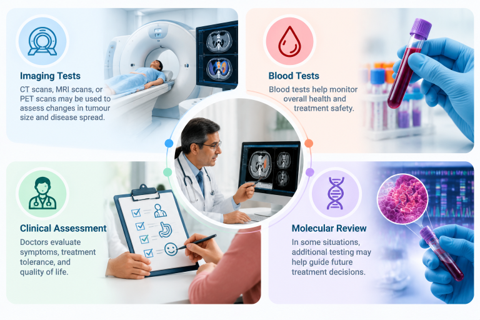
How Doctors Monitor Response to Immunotherapy and Targeted Therapy
Evaluation may include:
Regular follow-up allows treatment to remain aligned with the patient’s condition.
Combining Advanced Therapies With Other Rectal Cancer Treatments
A multidisciplinary approach ensures that every aspect of treatment is considered, from cancer control to recovery and quality of life.
Dr. Sandeep Nayak provides comprehensive colorectal cancer management through detailed assessment, personalised treatment strategies, and advanced care options for patients receiving rectal cancer treatment in Bangalore at MACS Clinic. His approach ensures that treatment decisions are tailored according to each patient’s tumour characteristics and individual needs.
Need Assistance?
Every rectal cancer case requires a personalised treatment plan. Get in touch with an expert to understand available therapies based on your cancer characteristics.
FAQ
What is immunotherapy for rectal cancer?
How does targeted therapy treat rectal cancer?
Is immunotherapy suitable for all rectal cancer patients?
What tests are needed before starting targeted therapy?
Can immunotherapy replace surgery or chemotherapy for rectal cancer?
What are the side effects of targeted therapy?
How long does immunotherapy treatment continue for rectal cancer?
Disclaimer: The information shared in this content is for educational purposes and not for promotional use.