
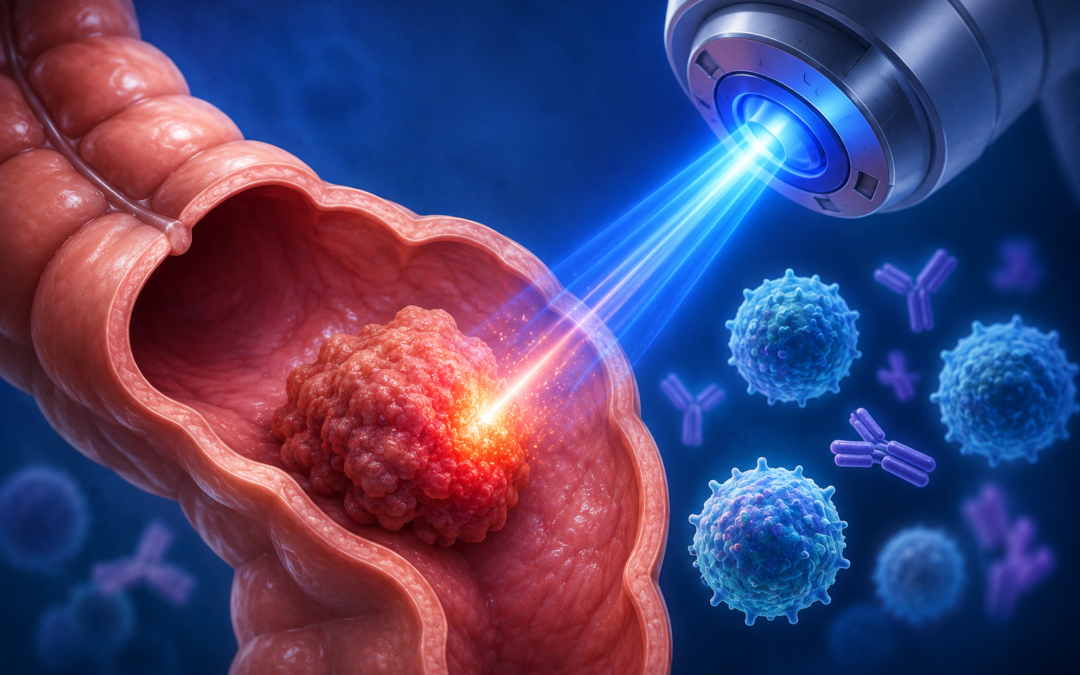
In select rectal cancer patients, surgery can be avoided entirely. When chemoradiation achieves a complete clinical response no detectable tumour on imaging or endoscopy patients may enter a watch-and-wait protocol instead of proceeding to surgery. This is an established pathway used in specialist centres globally, with outcomes comparable to surgery in carefully selected cases. Not everyone qualifies, and close monitoring is non-negotiable.
According to Dr. Sandeep Nayak, colorectal cancer treatment has shifted meaningfully in the last decade, with watch-and-wait now a genuine option for patients who achieve a complete response after chemoradiation rather than a compromise or a delay.
Wondering if your rectal cancer diagnosis means surgery is definitely on the table?
How Does Non-Surgical Rectal Cancer Treatment Work?
The pathway to avoiding surgery starts well before any decision is made, requiring a precise treatment sequence and strict response assessment.
- Neoadjuvant chemoradiation: Patients receive a course of chemotherapy combined with radiation therapy directed at the rectum and surrounding lymph nodes, typically over five to six weeks, with the goal of shrinking or eliminating the tumour before any surgical decision is finalised.
- Total neoadjuvant therapy: Some centres now deliver all chemotherapy before any local treatment rather than after surgery, and this intensified upfront approach has increased complete response rates significantly, meaning more patients reach the point where watch-and-wait becomes an option.
- Response assessment: Around eight to twelve weeks after completing chemoradiation, surgeons reassess using MRI, endoscopy, and clinical examination to determine whether the tumour has disappeared completely or only partially responded, because partial responders still need surgery.
- Watch-and-wait protocol: Patients with a confirmed complete clinical response are monitored closely with MRI and endoscopy every three months for the first two years, then less frequently, because roughly 25 to 30 percent of complete responders do experience local regrowth and will need surgery at that point.
The absence of a tumour on imaging doesn’t guarantee it’s gone at a cellular level, which is exactly why surveillance intensity matters as much as the initial response.Learn more about chemotherapy and targeted therapy for colorectal cancer.
Who Is a Candidate for Watch-and-Wait After Chemoradiation?
Not every rectal cancer patient is suitable, and the selection criteria are strict for good reason.
- Tumour location: Low and mid rectal cancers respond better to chemoradiation than upper rectal tumours, partly because of how radiation fields are targeted and partly because these are the cases where avoiding surgery carries the greatest functional benefit for the patient.
- Stage at diagnosis: Stage II and III rectal cancers are the primary candidates, as they’re locally advanced enough to warrant chemoradiation but haven’t spread to distant organs, while very early stage I tumours may be managed with local excision instead and stage IV disease requires a different treatment framework entirely.
- Complete clinical response: Only patients who show no residual tumour on MRI, no mucosal abnormality on endoscopy, and no palpable disease on examination qualify, because anything short of a complete response means the cancer is still present and needs to be removed surgically.
- Commitment to surveillance: Watch-and-wait isn’t a passive process. Patients need to attend frequent follow-up appointments without fail, because the window for salvage surgery after local regrowth is time-sensitive and outcomes are significantly worse when regrowth is caught late.
So watch-and-wait works best when the patient and the surgical team are both prepared for what the protocol actually demands.For related reading, see wait and watch for rectal cancer: an overview.
Why Choose Dr. Sandeep Nayak for Colorectal Cancer Surgery?
Dr. Sandeep Nayak is one of India’s most experienced colorectal surgeons, with over 20 years of specialised practice in robotic and laparoscopic rectal cancer surgery. His multidisciplinary team at KIMS Hospitals and MACS Clinic manages the full spectrum of rectal cancer treatment, including watch-and-wait protocols for patients who achieve complete clinical response, with the same rigour applied to surveillance as to surgery itself.
Patients here aren’t pushed toward the operating theatre when the evidence doesn’t support it, and they aren’t left without a safety net when it does. Decisions are made on tumour biology, response data, and what each individual patient stands to gain or lose.
FAQ
What is a complete clinical response in rectal cancer?
No detectable tumour on MRI, endoscopy, or clinical examination after chemoradiation.
How often do tumours regrow during watch-and-wait?
Roughly 25 to 30 percent of complete responders experience local regrowth within two years.
Is surgery still possible if the tumour grows back?
Yes. Most regrowths are caught during surveillance and treated with salvage surgery successfully.
Does watch-and-wait work for all stages of rectal cancer?
No. It’s primarily used for stage II and III rectal cancers that achieve complete chemoradiation response.
Reference
Disclaimer
This blog is intended for informational and educational purposes only. It does not constitute medical advice. Please consult a qualified medical professional for diagnosis and treatment guidance.