
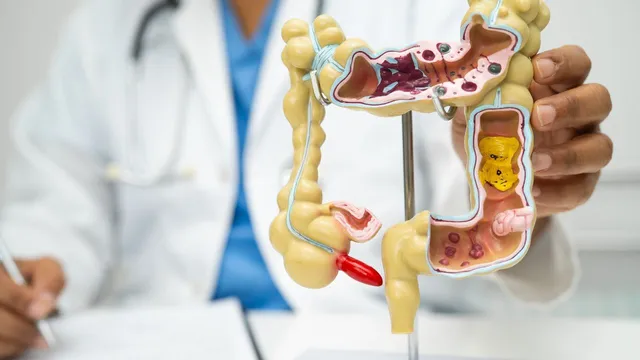
A colonoscopy is a diagnostic and therapeutic procedure in which a flexible, lighted scope is passed through the rectum to examine the full length of the large intestine, including the colon. It’s used to detect polyps, cancer, inflammation, and bleeding sources. Adults with average risk should start screening at 45. Those with a family history of colorectal cancer, prior polyps, or symptoms like rectal bleeding may need one earlier and more frequently.
According to Dr. Sandeep Nayak, leading colorectal cancer screening with colonoscopy remains the most reliable method for catching both precancerous polyps and early-stage disease before symptoms appear.
Noticing blood in your stool or a change in bowel habits that won’t resolve?
What Does a Colonoscopy Actually Detect?
Colonoscopy doesn’t just look. It can identify and remove abnormalities in the same session, which no other screening test manages.
- Polyps: Most colorectal cancers start as small, benign growths on the colon wall called polyps, and a colonoscopy can remove them on the spot before they ever turn malignant, cutting cancer risk significantly.
- Early cancer: Tumours confined to the inner layers of the colon wall produce no pain, no weight loss, no obvious signs. Colonoscopy finds them at a stage when surgery alone is often curative and prognosis is far better.
- Colitis: Chronic inflammation from conditions like ulcerative colitis shows up as mucosal changes, ulcers, and friable tissue that are only reliably assessed this way rather than through blood tests or imaging.
- Bleeding sources: Unexplained anaemia or rectal bleeding has several possible origins. A colonoscopy pinpoints whether it’s a polyp, haemorrhoid, diverticulum, or something that needs urgent follow-up.
A normal colonoscopy result at 45 with no polyps typically means the next one isn’t needed for 10 years. Learn more about surgery for complex polyps and early cancers.
Who Should Get a Colonoscopy and How Often?
Not everyone follows the same schedule. Risk profile, family history, and prior findings all shift the timeline considerably.
- Average risk: Adults at standard risk start at 45 and repeat every 10 years if results are normal, though many people push it off far longer than that, which is how early cancers get missed entirely.
- Family history: A first-degree relative diagnosed with colorectal cancer before 60 means screening should start 10 years earlier than that relative’s diagnosis age, and repeat every 5 years rather than 10.
- Symptomatic patients: Rectal bleeding, a sudden shift in bowel habit lasting more than four weeks, unexplained weight loss, or persistent lower abdominal pain all warrant a colonoscopy regardless of age. Don’t wait for a screening milestone.
- Post-polypectomy: If polyps were removed in a previous colonoscopy, the follow-up interval drops to 3 to 5 years depending on the number, size, and type found, because these patients carry higher recurrence risk.
Patients who’ve had colorectal cancer treatment also need regular surveillance colonoscopies, typically at one year post-surgery, then every three to five years. For related reading, see when to consider early screening based on hereditary and family risk. To understand how colonoscopy fits into the broader picture, read more on how colorectal cancer is diagnosed early.
Why Choose Dr. Sandeep Nayak for Colorectal Cancer Surgery?
Dr. Sandeep Nayak is one of India’s most experienced colorectal surgeons, with over two decades of specialised practice in robotic and laparoscopic colorectal procedures. As Executive Director of Surgical Oncology at KIMS Hospitals, he has built a clinical programme that integrates diagnostic precision with surgical expertise, so findings from a colonoscopy translate directly into the most appropriate treatment plan without delay or referral gaps.
His patients consistently move from diagnosis to surgical intervention faster than standard pathways allow. The outcomes speak plainly: high sphincter preservation rates, low complication rates, and a track record in managing complex cases that other centres have turned away.
FAQ
Is sedation used during a colonoscopy?
Yes. Most colonoscopies are done under conscious sedation, so patients don’t feel discomfort.
How long does the procedure take?
A standard colonoscopy takes 20 to 45 minutes depending on findings.
Can polyps be removed during the same procedure?
Yes. Polyps identified during colonoscopy are usually removed immediately in the same session.
How should I prepare for a colonoscopy?
Bowel preparation involves a liquid diet the day before and a prescribed laxative solution.
Reference
Disclaimer
This blog is intended for informational and educational purposes only. It does not constitute medical advice. Please consult a qualified medical professional for diagnosis and treatment guidance.