

Blood in stool isn’t always colorectal cancer, but it’s never something to dismiss without clinical evaluation. Most cases stem from benign anorectal conditions like haemorrhoids, anal fissures, or diverticular disease. Bright red blood typically points to a lower GI source, while dark or tarry stool suggests upper GI bleeding. But cancer can mimic both patterns, which is why the cause can’t be assumed from colour alone.
According to Dr. Sandeep Nayak, colorectal cancer surgeon, “Patients often delay consultation assuming rectal bleeding is just piles that assumption delays diagnosis in cases where early surgical intervention would have made a significant difference.”
Noticing blood in stool more than once or alongside other bowel changes?
What Are the Non-Cancerous Causes of Blood in Stool?
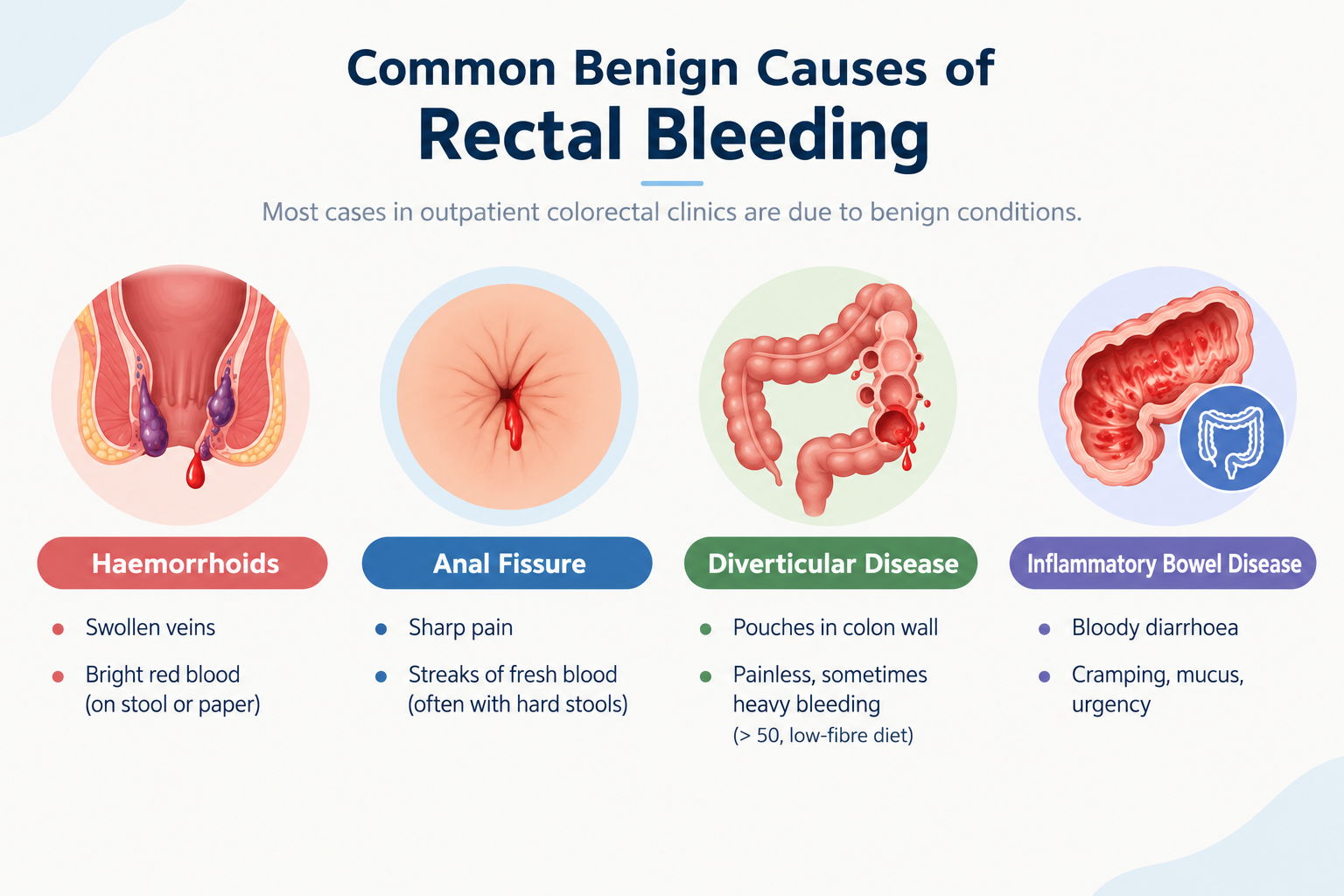
Benign causes are more common, but that doesn’t mean investigations should be skipped when rectal bleeding recurs or changes character. Robotic surgery for colon cancer
When Does Blood in Stool Signal Colorectal Cancer?
Certain clinical features of rectal bleeding raise concern for colorectal cancer and warrant prompt colonoscopic or surgical evaluation.
- Persistent Bleeding: Blood that appears consistently over several weeks, especially without a clear benign diagnosis, shouldn’t be attributed to haemorrhoids without ruling out a malignant source higher in the colon.
- Change in Stool Habit: Narrowing of stool calibre, unexplained alternating diarrhoea and constipation, or a persistent feeling of incomplete evacuation alongside bleeding are red flags that point to a mass lesion.
- Dark or Mixed Blood: Blood that’s mixed within the stool rather than coating it, or stool that appears maroon or black, suggests bleeding from the ascending colon or higher — areas haemorrhoids simply don’t reach.
- Systemic Symptoms: Unexplained weight loss, fatigue, and iron-deficiency anaemia appearing alongside rectal bleeding in an adult over 40 significantly raise the likelihood of an underlying malignancy.
Colorectal cancer caught at stage I carries survival rates above 90%, making early investigation the most critical clinical decision in this workup. Robotic-assisted colon surgery
Why Choose Dr. Sandeep Nayak for Colorectal Cancer Surgery?
Dr. Sandeep Nayak holds MBBS, DNB in General Surgery, DNB in Surgical Oncology, MRCS (UK), and a Fellowship in Laparoscopic and Robotic Onco-Surgery, with over 24 years of experience including 15 years of robotic and minimally invasive cancer surgery. As Chairman of Oncology Services, Karnataka, and Executive Director of Surgical Oncology at KIMS Hospital, Bangalore, he has published over 25 research studies and pioneered techniques including RABIT and MIND.
Patients who come in early leave with options. Those who wait often don’t. That’s the clinical reality, and it’s why timely evaluation of rectal bleeding however mild it seems matters more than most patients realise.
FAQ
Can haemorrhoids and colorectal cancer both cause rectal bleeding?
Yes, both can bleed, which is why clinical evaluation is needed to distinguish them.
Is black stool always a sign of colorectal cancer?
Not always; black stool can result from upper GI bleeding or iron supplements.
At what age should colorectal cancer screening begin?
Screening typically starts at age 45, or earlier with a family history of colorectal cancer.
Does blood in stool always require a colonoscopy?
Not always, but persistent or unexplained rectal bleeding usually warrants one.
Reference
Disclaimer
This blog is intended for informational and educational purposes only. It does not constitute medical advice. Please consult a qualified medical professional for diagnosis and treatment guidance.